
Loading...
Serving Santa Monica, CA and surrounding areas. (424) 322-2527
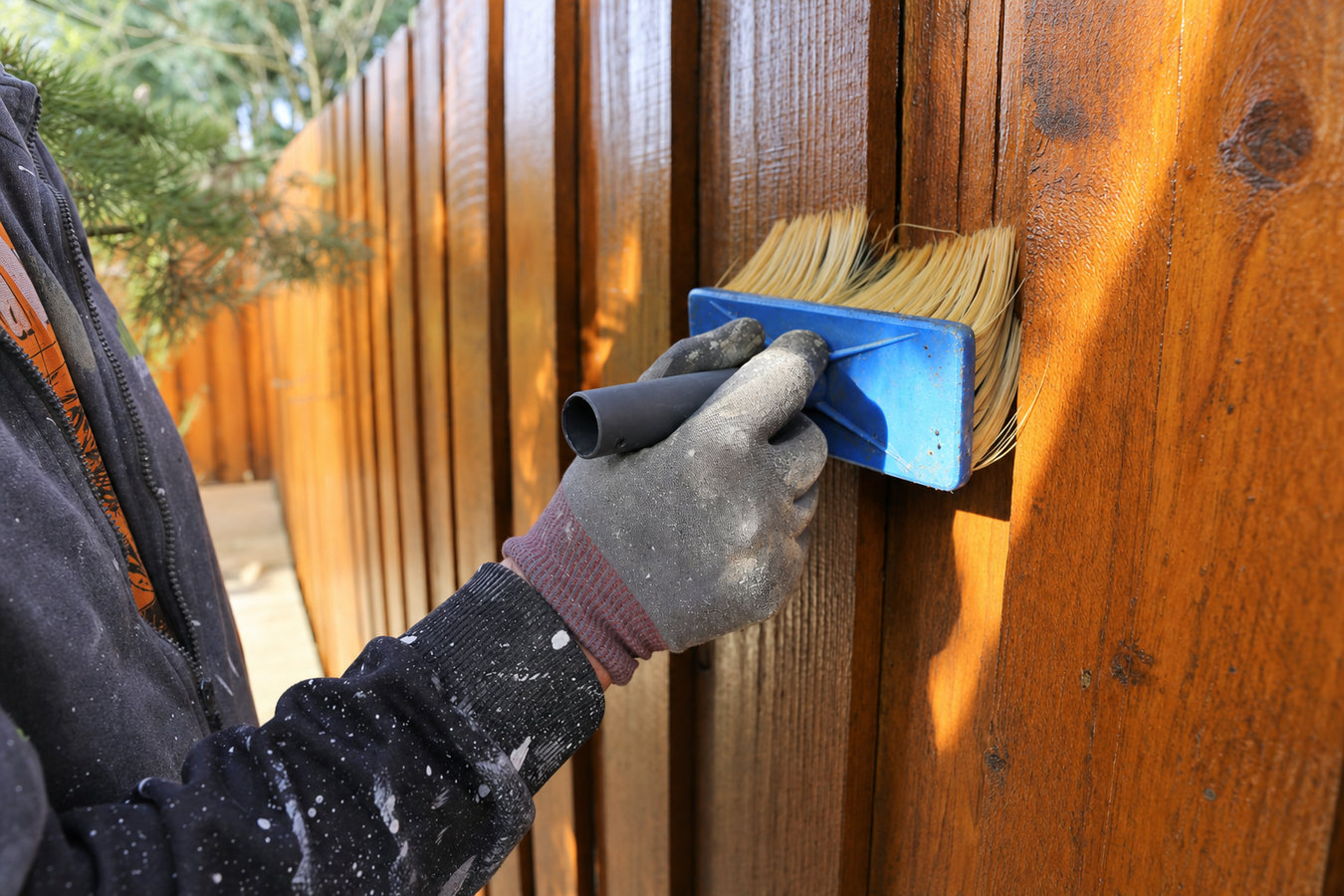
Santa Monica's salt air and marine moisture break down unprotected wood fast. We stain and seal fences with products formulated for the coast - so your fence stays protected, not just looking good on day one.
Fence staining and sealing in Santa Monica adds a protective layer that slows down moisture absorption and wood deterioration - most residential jobs take one to two days from prep through final coat, with the wood needing 24 to 48 hours to dry between washing and staining.
If you have a wood fence in Santa Monica, the coastal environment is working against it every day - salt particles in the air settle on the surface and break down unprotected finishes faster than most homeowners expect. Staining soaks protective ingredients into the wood fibers, while sealing adds a water-resistant barrier on top. Together, they slow the natural cycle of moisture absorption and drying that causes wood to crack, warp, and eventually rot. If a fence has already progressed past the point where staining helps, our page on fence repair covers what that looks like.
Regular staining and sealing is almost always more cost-effective than waiting until visible damage appears. Fences that are treated on a consistent schedule avoid the board replacements and post repairs that add up quickly in Santa Monica's coastal climate. If yours has reached the point where repair or replacement is the better call, we offer honest guidance on both options - and our page on fence replacement explains what to expect when it comes to that.
When wood loses its protective finish, it begins to oxidize and turn a dull gray or silver color. This is not just cosmetic - it means the wood is drying out and becoming more vulnerable to cracking. In Santa Monica, oxidation happens faster than in inland cities because salt air and UV work on the surface year-round. If your fence has gone gray, it is not too late to treat it, but acting sooner means less prep work and cost.
Splash a small amount of water on the fence. If it soaks straight in rather than beading up and rolling off, the protective seal has worn through. This is especially worth checking after Santa Monica's winter rain season, when fences take on the most moisture. Once the seal is gone, every wet morning and dry afternoon accelerates damage to the wood underneath.
A white or powdery film on your fence boards - particularly near the base or on the side facing the ocean - is salt residue from the coastal air. It means moisture and salt are actively working on the wood surface. Left untreated, this accelerates the breakdown of the wood itself, not just the finish, and eventually leads to rot that no staining job can reverse.
Run your hand along the fence boards. If the surface feels rough and splintery rather than smooth, or if you can see small cracks running along the grain, the wood has started to dry out and contract. Staining and sealing at this stage can stop the damage from going deeper - but waiting longer risks the cracks widening to the point where boards need to be replaced before staining is even possible.
We stain and seal wood fences throughout Santa Monica, handling everything from the initial prep wash to the final coat and written care schedule. Every job starts with a thorough cleaning to remove salt residue, mildew, and old loose finish - because the prep work matters more than the product itself. We offer semi-transparent stains for fences with attractive grain that homeowners want to show, and solid stains for older or rougher wood where full coverage makes more sense. If your fence has old layers of paint or stain that need to be stripped before new product can penetrate, we account for that in the written estimate before work begins. After every job, we leave you with a record of what was applied and a plain-language recommendation for when the fence will need attention again.
Staining and sealing is one part of keeping a fence in good shape over time. If boards or posts are already damaged, we coordinate fence repair work before the staining job so you are not finishing over compromised wood. And if your fence is too far gone for staining to help, we have a straightforward conversation about whether fence replacement makes more sense for your situation.
Best for fences with attractive grain the homeowner wants to preserve - shows the natural wood character while adding protection.
Better choice for older, rougher wood that has already started to gray or show surface damage - full coverage with a cleaner look.
A clear protective coat added over stain or applied alone on fences in good condition - creates the bead-off effect that protects the wood.
Thorough wash to remove salt residue, mildew, and old loose finish before any product goes on - the most important step in how long the job lasts.
For fences with multiple built-up layers of old paint or stain that prevent new product from penetrating - assessed and quoted before work starts.
Written record of the products used, the date of the job, and when the fence will need its next treatment - so you are never guessing.
Most of Santa Monica sits within a mile or two of the Pacific Ocean, and that proximity has real consequences for wood. The coastal air carries fine salt particles year-round - not just near the beach, but throughout neighborhoods like Ocean Park and Sunset Park. Salt settles on wood surfaces and slowly breaks down any protective finish, which means the two-to-three-year treatment schedule recommended here is shorter than what inland homeowners deal with. On top of the salt, Santa Monica's famous marine layer - the morning fog that rolls in from May through July - keeps humidity high on days that look clear by afternoon. Stain applied to damp wood will not cure correctly, which is why local scheduling knowledge matters as much as the product choice. Homeowners in Venice and Pacific Palisades face the same coastal conditions and benefit from the same approach.
Santa Monica also has a large share of homes built between the 1940s and 1970s, and many of those properties have fences that have been stained or painted multiple times over the decades. Layers of old product can prevent new stain from penetrating properly, which means more prep work than a newer fence would require. This is one reason why an in-person assessment before quoting is non-negotiable - what looks like a straightforward staining job may have underlying prep needs that change the cost and timeline. A contractor who quotes over the phone without seeing the fence is skipping a step that matters. The U.S. Forest Service Forest Products Laboratory has published extensive guidance on how surface preparation affects how long wood finishes last - and the evidence consistently points to prep as the most important variable.
We respond within 1 business day. You tell us how long your fence is and when it was last treated. We schedule a free on-site visit - because the condition of the existing finish changes both the product choice and the price, and we do not guess that over the phone.
We inspect the full fence - checking wood condition, old finish layers, any rot or cracking, and which way the fence faces. You get a written estimate that breaks out prep work, product, and labor. If boards need replacing before staining, we tell you that upfront.
The crew washes the fence thoroughly to remove dirt, salt residue, and old loose finish. The fence then needs 24 to 48 hours to dry completely before stain goes on. In Santa Monica, we check the marine layer forecast for the drying period - not just the general weather - before scheduling the staining day.
Once the fence is dry, we apply stain and sealant and mask off plants, concrete, and adjacent surfaces. Before we leave, we walk you through the fence, confirm the drying window, and give you a written record of what was applied and when to schedule your next treatment.
Free on-site estimate. Written quote before any work starts. No obligation.
We select stains and sealants specifically tested for coastal conditions - not generic products that work fine in the San Fernando Valley but break down faster here. Santa Monica's salt air requires a different approach than standard residential fence finishing.
June Gloom and morning marine layer can leave wood surfaces damp even on days that look sunny. We plan staining work for afternoons and check humidity forecasts - not just temperature - so the finish cures correctly the first time.
Many Santa Monica neighborhoods have association rules about fence colors and finishes. We ask about HOA requirements before we quote - so the color you choose will pass review without a surprise second visit or a redo at your expense.
You get a plain-language record of what products were applied, the date of the work, and when your fence will need attention again. No guessing about when to call us back - and no contractor who disappears after the final coat is dry.
The American Fence Association sets industry standards for fence work across the country, and we follow those guidelines on every job. Combined with our experience working specifically in Santa Monica's coastal neighborhoods, that means staining jobs that hold up longer and a process that has no surprises for the homeowner from first call to final coat.
When a fence has reached the end of its life, full replacement with materials suited to Santa Monica's coast is often more economical than continued maintenance.
Learn MoreBefore staining makes sense, rotted boards or shifted posts may need to be addressed - we handle both in a single visit when possible.
Learn MoreCall us today or submit a request online - we respond within 1 business day and schedule free on-site estimates throughout Santa Monica and the surrounding Westside.